
Unlocking Decentralized Mining: Deep Dive into Pod256 Episode 103
Newsletter Edition: Closed-Source is Retarded – Building Bitcoin Miners for Homes, Businesses, and Beyond

February 04, 2026 | Curated for Tech Enthusiasts in Bitcoin Innovation
Hey tech-savvy Bitcoiners!
If you’re deep into hardware hacking, energy optimization, or decentralizing the hashrate, POD256’s Episode 103 is a goldmine. Co-hosted by @econoalchemist, @skot9000, and @tylerkstevens, this episode tears down the walls of proprietary mining tech and builds up open-source alternatives that turn waste heat into real-world value. Guests Tyler Stevens from Exergy Heat and a live dial-in from Skot and Joe Nakamoto at El Salvador’s Plan B conference bring frontline insights. We’re going in-depth here with breakdowns, bullets, tables, visuals of key hardware, and buzz from related X posts to give you the full picture. Let’s dissect why closed-source is holding us back and how open ecosystems are the future.
Hosts and Guests Breakdown
Hosts:
@econoalchemist: Focuses on economic angles of mining.
@skot9000: Hardware innovator, instigator of the Bitaxe project.
@tylerkstevens: Thermal engineering expert, CEO of Exergy Heat.
Guests:
Joe Nakamoto: Dialing in from El Salvador’s Plan B conference for global adoption vibes.
This lineup ensures a mix of technical depth, community focus, and real-time event tie-ins.
The Core Argument: Why Closed-Source Mining is “Retarded”
The episode pulls no punches on proprietary hardware’s flaws. Closed-source systems create black boxes that stifle innovation, complicate safety certifications, and disrupt long-term planning. As manufacturers shift to hydro-only designs, three-phase power requirements, and phase out 240V options, home and business miners are left in the lurch. Key pain points include:
Innovation Barriers: Limited customization leads to outdated setups.
Safety and Reliability Issues: Hard to certify or predict hardware longevity.
Accessibility Problems: Fewer options for standard voltage mean higher entry costs for non-industrial users.
Scalability Traps: At scale, closed firmware causes outages, poor UIs, limited logs, and undocumented APIs, eroding trust.
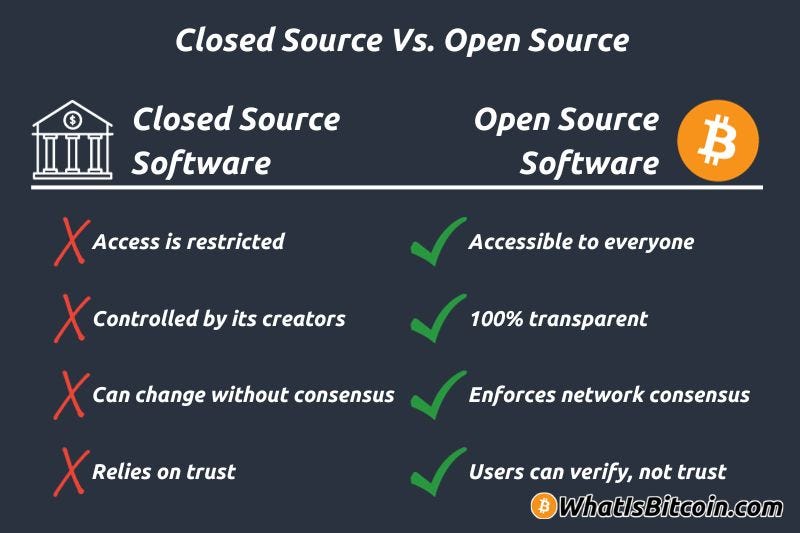
Visualize the shift: Traditional closed-source rigs are bulky, inefficient beasts, while open alternatives promise modularity.
Rise of the Open-Source Mining Stack
The 256 Foundation is leading the charge with a fully open ecosystem. Here’s a table comparing closed vs. open-source approaches, followed by details on key components:
AspectClosed-Source MiningOpen-Source Alternatives (256 Foundation)FirmwareProprietary, limited accessMujina: Flexible, community-drivenHardware ComponentsBlack-box hash/control boardsOpen hash boards and control boards for customizationPoolingCentralized, profit-drivenHydra Pool: Decentralized, donation-only to fund developmentFleet ManagementVendor-lockedTether’s open-sourced MOS platform for scalable opsCommunity SupportMinimal collaborationThriving Discords and summits for shared innovationHeat ReuseWaste byproductIntegrated designs like sous vide heaters
Mujina Firmware: Open-source code for better control, integration, and debugging.
Open Hash and Control Boards: Allow builders to tweak for specific needs, lowering barriers via pick-and-place machines.
Hydra Pool: Point your hashrate here to support the foundation—it’s donation-based for true decentralization.
Tether’s MOS Platform: Newly open-sourced for managing fleets in open environments.
Check out examples of open-source hardware like the Bitaxe:


Thriving Communities Fueling Innovation
No more gatekeepers—these groups are democratizing mining tech:
OSMU Discord: Central hub for open-source discussions, collaborations, and troubleshooting. Learn more here
Hashrate Heatpunks: Dedicated to creative heat-reuse projects, from home heaters to industrial apps. Learn more here
Jua Kali: Jua Kali is an open-source project designed to run Bitcoin ASIC hashboards on direct DC power, such as from solar panels or batteries.. Learn more here
Heatpunk Summit: Bridges HVAC experts with mining developers to tackle integration challenges like sensor feedback and power management. Learn more here
Join these for hands-on support and to contribute to the next wave of tools.
Real-World Applications: From Homes to Towns
The episode spotlights how mining can go beyond profit to practical utility. Waste heat becomes an asset:
Home Integrations: Reference designs like a sous vide heater powered by miner sensors and management—heat your water while hashing.
Business and Community Scale: Deployments for buildings or entire towns, turning hashrate into heating infrastructure.
New Dashboards: Tools for monitoring hashrate, optimizing efficiency, and ensuring decentralization.
Energy Efficiency: Ideas like integrating with solar/wind for sustainable setups, outcompeting centralized facilities.
Here’s a diagram of heat reuse in action:
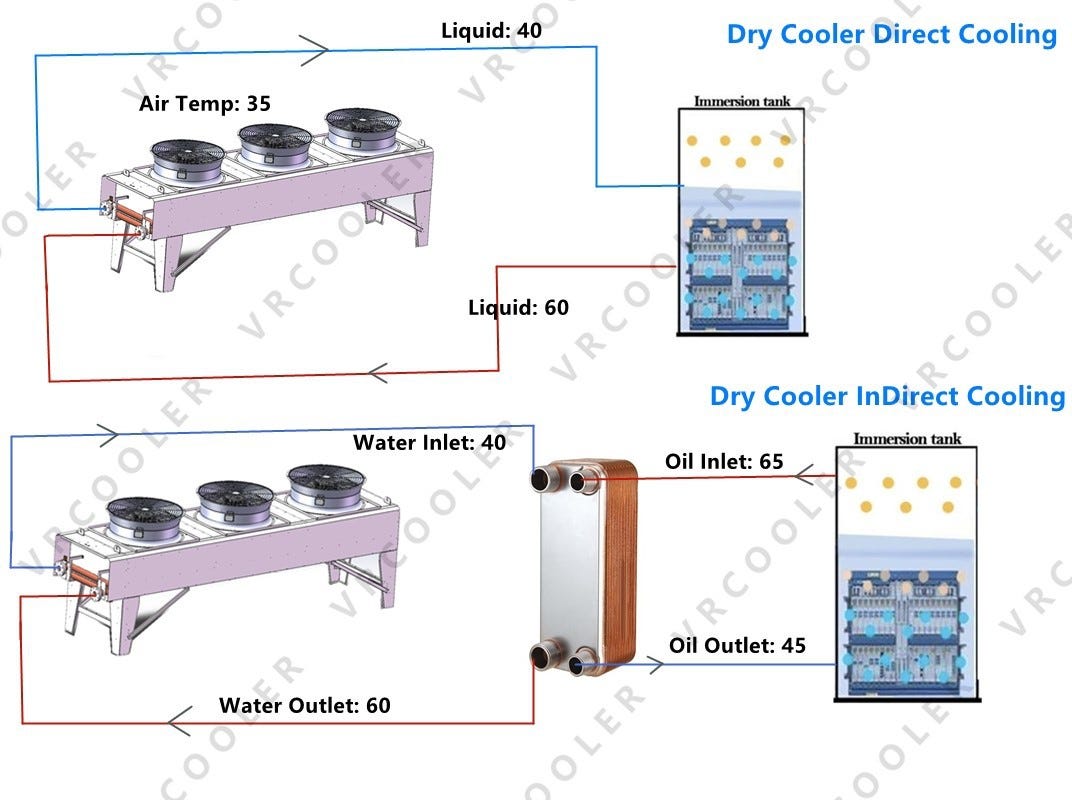
And a larger-scale setup for inspiration:

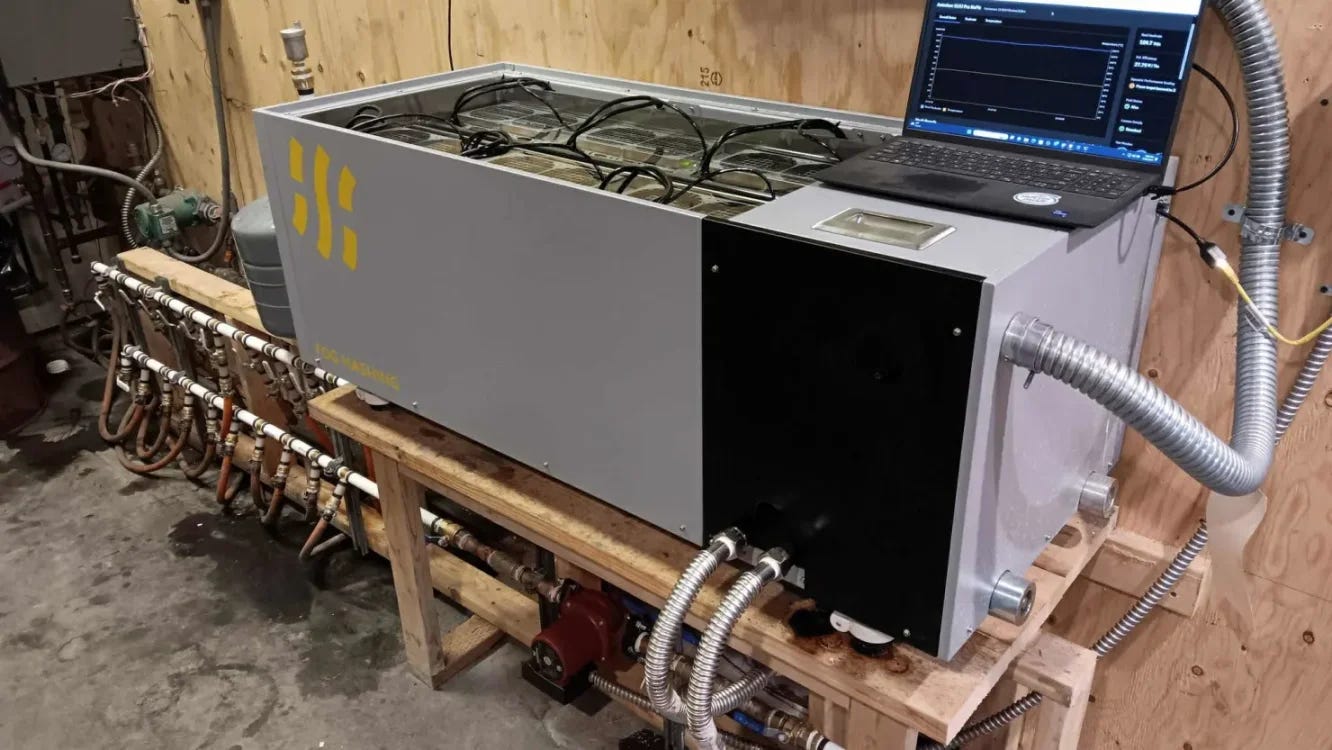
Exergy Heat’s tech exemplifies this:

For creative repurposing, like greenhouse heating:
Updates from El Salvador: Plan B Conference Insights
Skot and Joe Nakamoto called in live from the Plan B conference, sharing how Bitcoin adoption is accelerating mining innovations in emerging markets. Key notes include real-world hashrate distribution, regulatory resilience, and tying home mining to national energy strategies.
Buzz from X: Related Posts and Community Chatter
The episode’s themes are echoing across X. Here’s a curated selection of relevant posts amplifying the discussion:
@econoalchemist: “Closed-source Bitcoin mining software is retarded. Hats off to Tether for this.” (Echoing the episode’s title and praise for open-sourcing MOS.)
@AsherHopp: Discusses how debt-fueled mega-miners inflate hashrate, making home mining tougher—aligns with calls for decentralized alternatives.
@Schnitzel: “Firmware makes it worse. Closed source. Bad UIs. Limited logs. Undocumented APIs.” (Direct critique of closed systems’ operational pitfalls.)
@peterktodd: Argues large facilities will be outcompeted by integrated, heat-reusing home setups.
@BitronicsStore: “THE POWER OF OPEN SOURCE… decentralizing the hashrate and having a miner in every Bitcoiner’s home.” (Shoutout to projects like Bitaxe.)
@tylerkstevens: Calls out mega-miners’ reliance on non-American closed firmware.
@skot9000: Envisions “an enormous global legion of miners running open source hardware… that fixes Bitcoin mining.”
@ContraVibes: “Open-sourcing this breaks the vendor lock-in… we get real geographic distribution of hashrate.”
These posts show the community’s pulse, join the conversation on Twitter for more.
Top Takeaways for Tech Enthusiasts
Ditch Closed-Source: It kills flexibility; open stacks like Mujina and Hydra empower builders.
Heat as Value: Reuse mining byproducts for heating, practical for homes, scalable for communities.
Community-Driven Progress: Discords and summits are where innovations happen.
Global Decentralization: Insights from El Salvador highlight resilient, distributed hashrate.
Get Building: Support via Hydra Pool donations and explore tools like Bitaxe for your setup.
This episode isn’t just talk, it’s a blueprint for the next era of Bitcoin mining.
Listen Now: Dive into the full episode at POD256 Episode 103.
Get Involved: Hop into OSMU Discord, point hashrate to 256 Foundation, or reply on X with your mining hacks!
Stay innovative,
256 Foundation