
Assembling Freedom #24 - Bitcoin Mining Renaissance: Stratum V2, Nonce Space, and the DIY Miner Comeback
From POD256 Episode #112 – Tailored for Tech Enthusiasts April 15, 2026 (Comply or Die on Tax Day Edition)

Welcome, hashers and protocol nerds! This week’s POD256 episode—co-hosted by @econoalchemist, @skot9000, and @tylerkstevens —delivers a no-BS, host-led masterclass on the resurgence of home mining, the open-source firmware revolution, and why Stratum V2 is the protocol upgrade Bitcoin mining desperately needs. No guests, just deep technical tangents on nonce space, version rolling, decentralized pools like HydraPool, ASIC roadmaps, and the cultural shift back to permissionless, DIY Bitcoin production.
If you’re into sovereignty, low-level protocol design, or tinkering with ASICs in your garage, this episode (and this newsletter) is your new favorite read. We’ll break it down with bullet-point deep dives, comparison tables, visual diagrams, nonce math, and fresh X chatter from the community. Let’s hash it out.
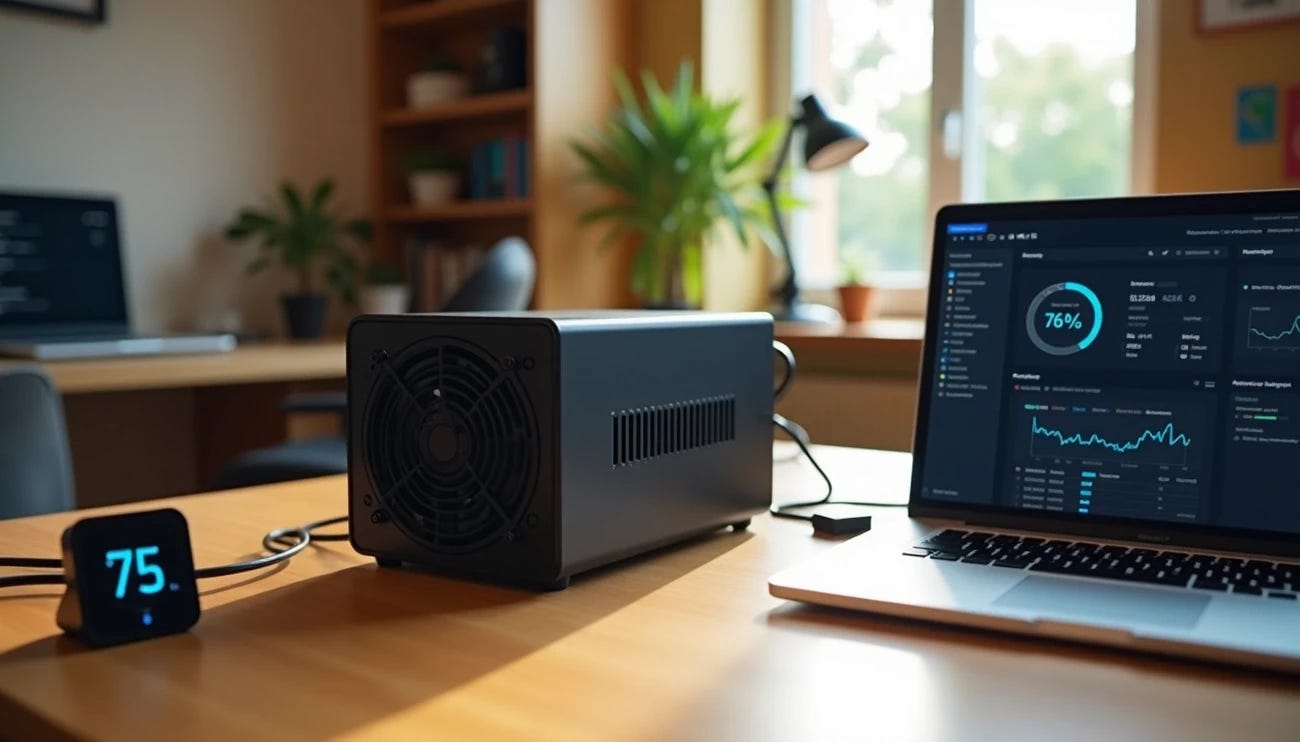
1. The DIY Miner’s Comeback: History, 2020 Wave, and Why Small Hardware Still Matters
The episode traces Bitcoin mining’s arc from laptop experiments to industrial farms—and back. Key highlights:
Early days recap: Solo mining on CPUs/GPUs gave way to ASICs; Chinese dominance followed until the 2021 ban created a global hash-rate diaspora.
2020 resurgence: Cheap used ASICs flooded the market post-ban. Guides like Mining for the Streets and Home Mining for Non-KYC Bitcoin ignited a tinkerer movement—non-KYC sats via home rigs became a privacy flex.
The Bitaxe effect: Tiny, open-source miners (like the Bitaxe family) aren’t about raw TH/s—they’re about education, community, and proving decentralization at the edge. A single Bitaxe teaches more about consensus than a rack of rented hash.
Culture evolution: From sketchy Telegram deals to mature open-source ecosystems with Telegram groups turning into real builders’ networks.
Why it matters for tech enthusiasts: Home mining isn’t dead—it’s evolving into a sovereignty tool. Even modest setups contribute to hash-rate distribution and mempool policy signaling.
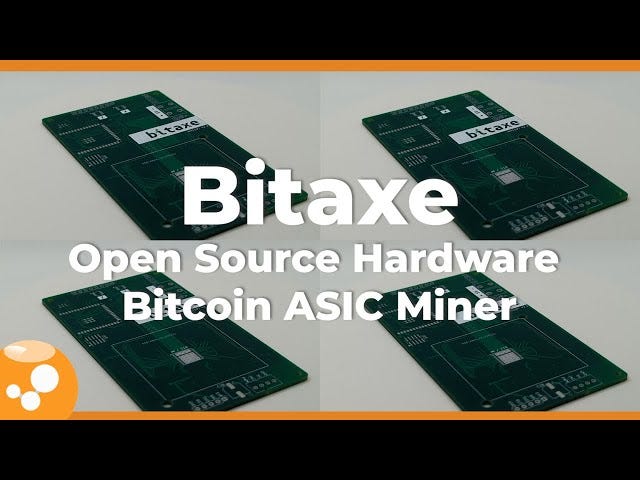
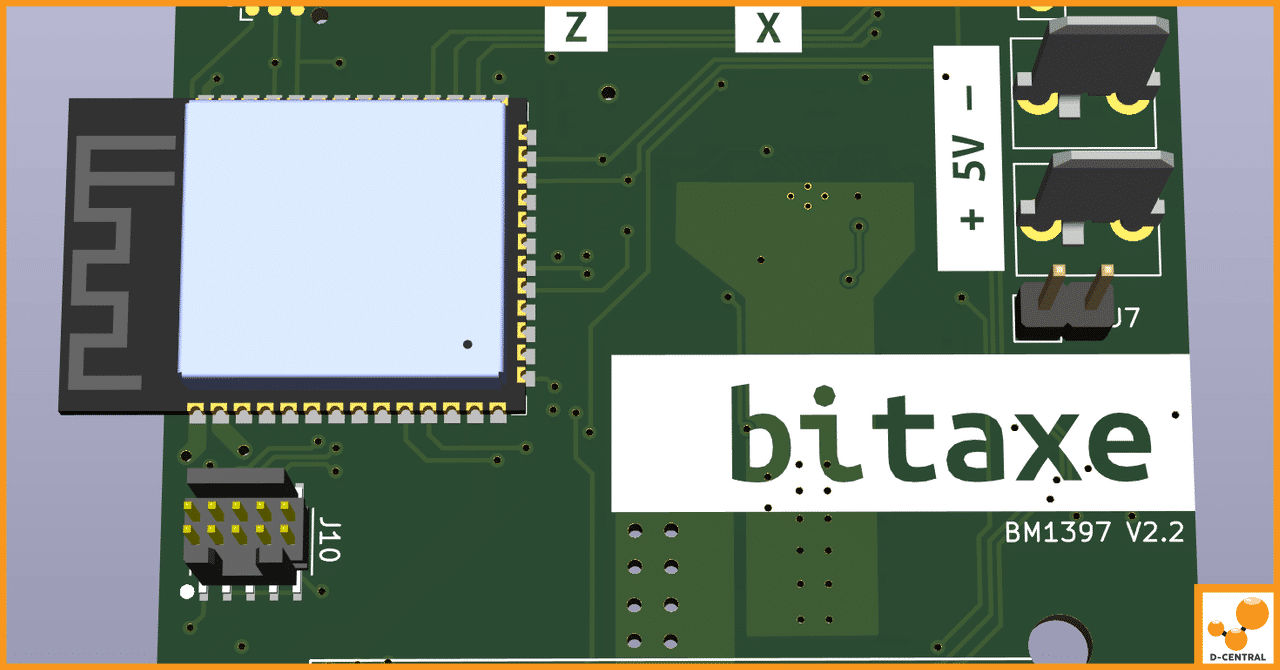
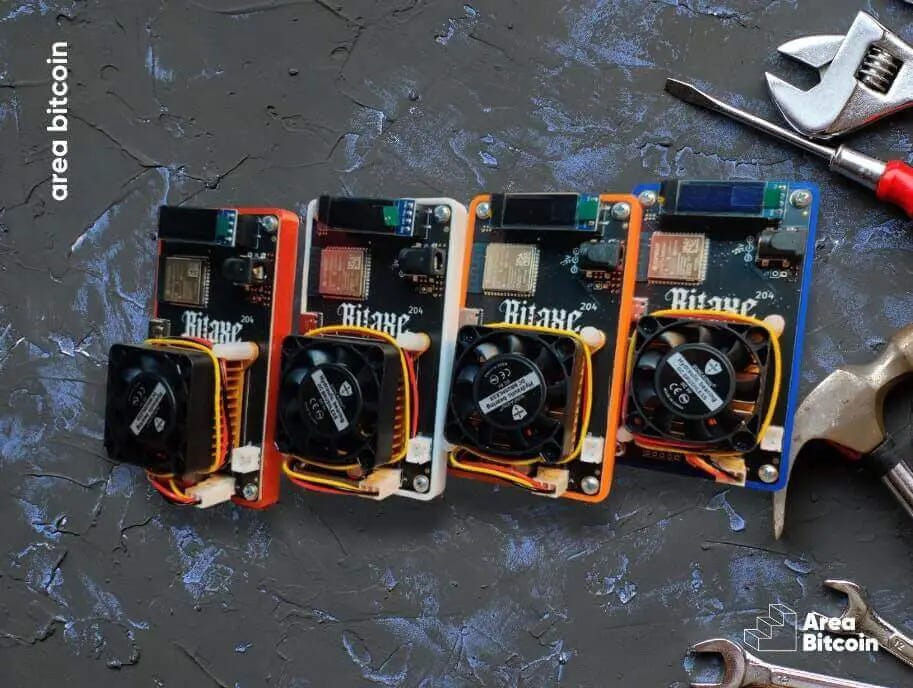
2. Open-Source Firmware Explosion: Mujina, Braiins BCB100, and S19 Support
The hosts geek out on how open hardware + firmware is supercharging DIY mining:
Mujina on Braiins BCB100 control board: Expands compatibility to entire generations of Antminer S19s.
Stratum V2 + Mujina combo: Enables permissionless iteration—miners run their own nodes, propose templates, and escape pool gatekeeping.
Bitaxe & AxeOS momentum: Native Stratum V2 support in open-source firmware lets hobbyists point directly at personal nodes for true solo mining.
This isn’t hype; it’s the tooling layer that turns “rented hash” into sovereign infrastructure.
3. Stratum V2 Technical Deep Dive: Nonce Space, Header-Only Mining, and Decentralization
Stratum V1’s “poorly specified, closed implementations” created centralization risks. V2 fixes this with binary framing, encryption (Noise Protocol), and miner agency.
Core innovations discussed:
Job Negotiation: Miners (or proxies) propose block templates to the pool. Pools validate but can’t censor txs. Although the pool operator still controls the coinbase payout tx and they are in charge of share accounting.
Header-Only Mining (HOM): Devices work on just the block header—no extranonce/Merkle path recalculation needed on the ASIC.
Nonce space math (per nTime value, fixed):
Standard Channel search space = ( 2{(\text{NONCE_BITS} + \text{BIP320_VERSION_ROLLING_BITS})} = 2 \approx 280 ) TH.
Extended Channels add extranonce bits for massive parallelization. Version rolling (BIP320) + nonce (32-bit) + nTime rolling gives each device a guaranteed slice of the ~2^256 search space.
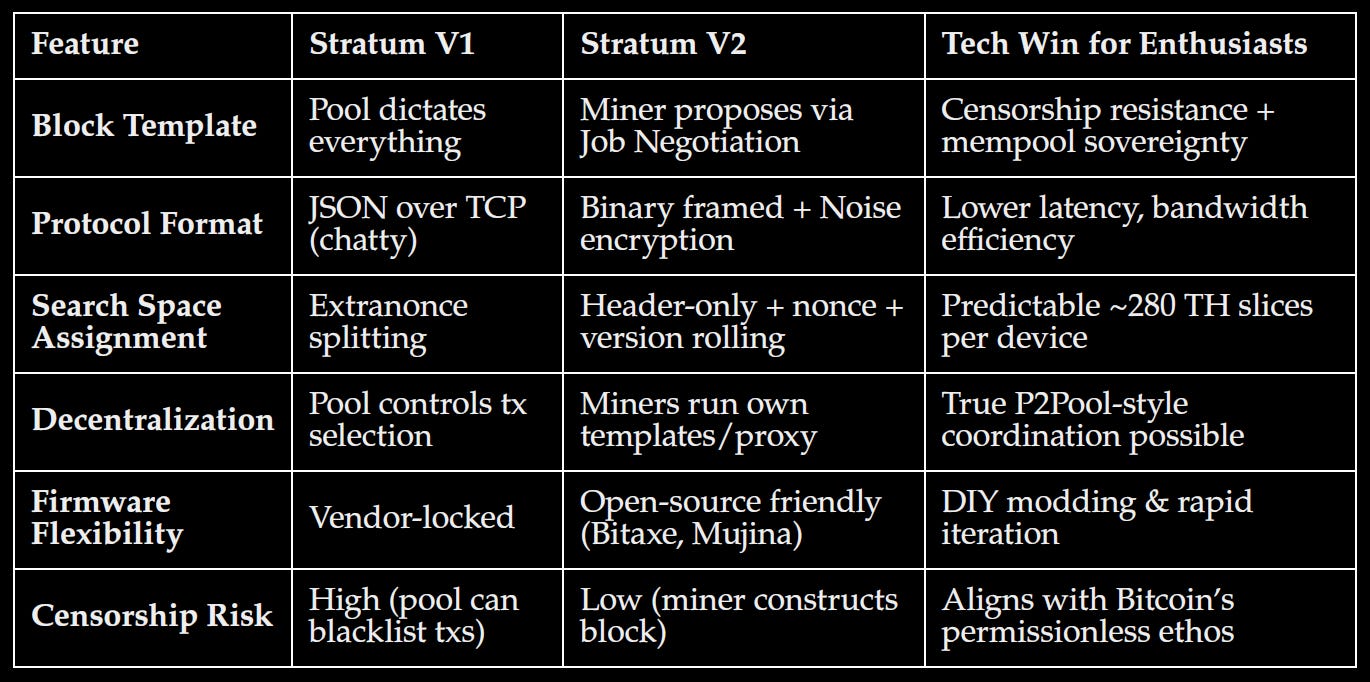
Stratum V1 vs V2 Comparison Table (pulled from protocol specs and episode context):
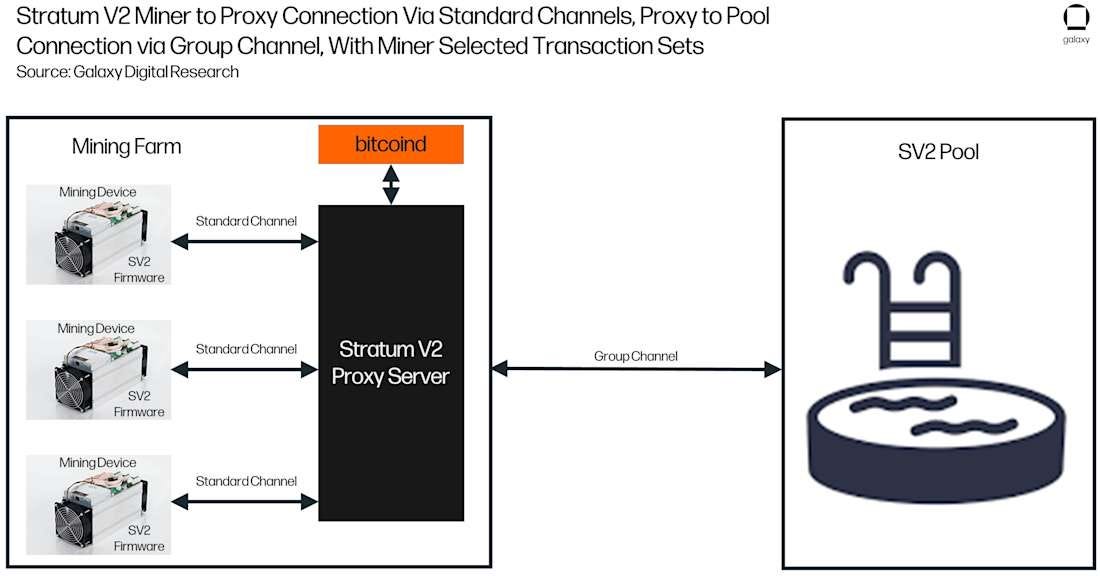
Visual of Stratum V2 Architecture (proxy + standard channels + group channel to pool):
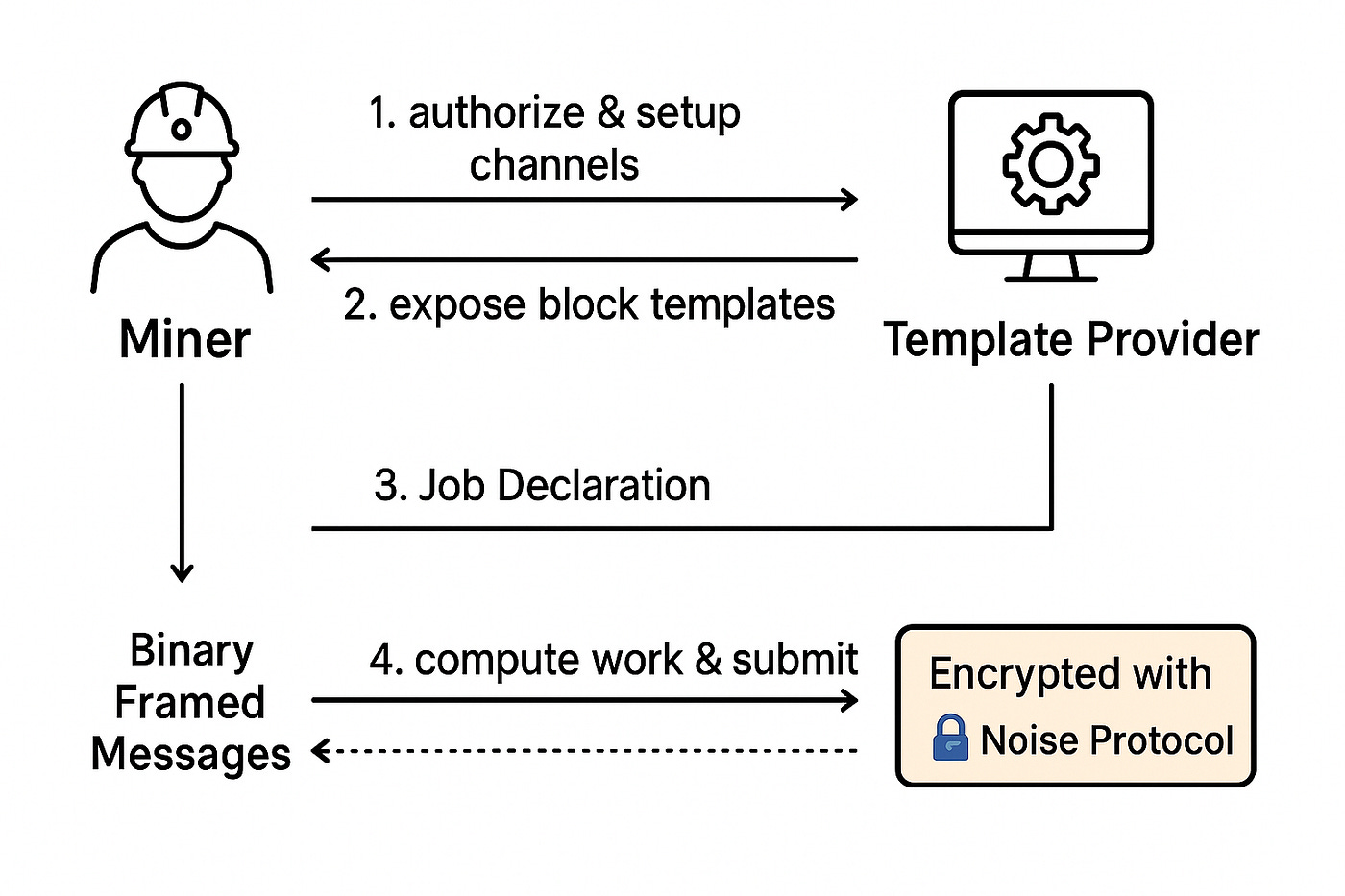
Nonce visualization—how miners iterate nonces inside the candidate block header:
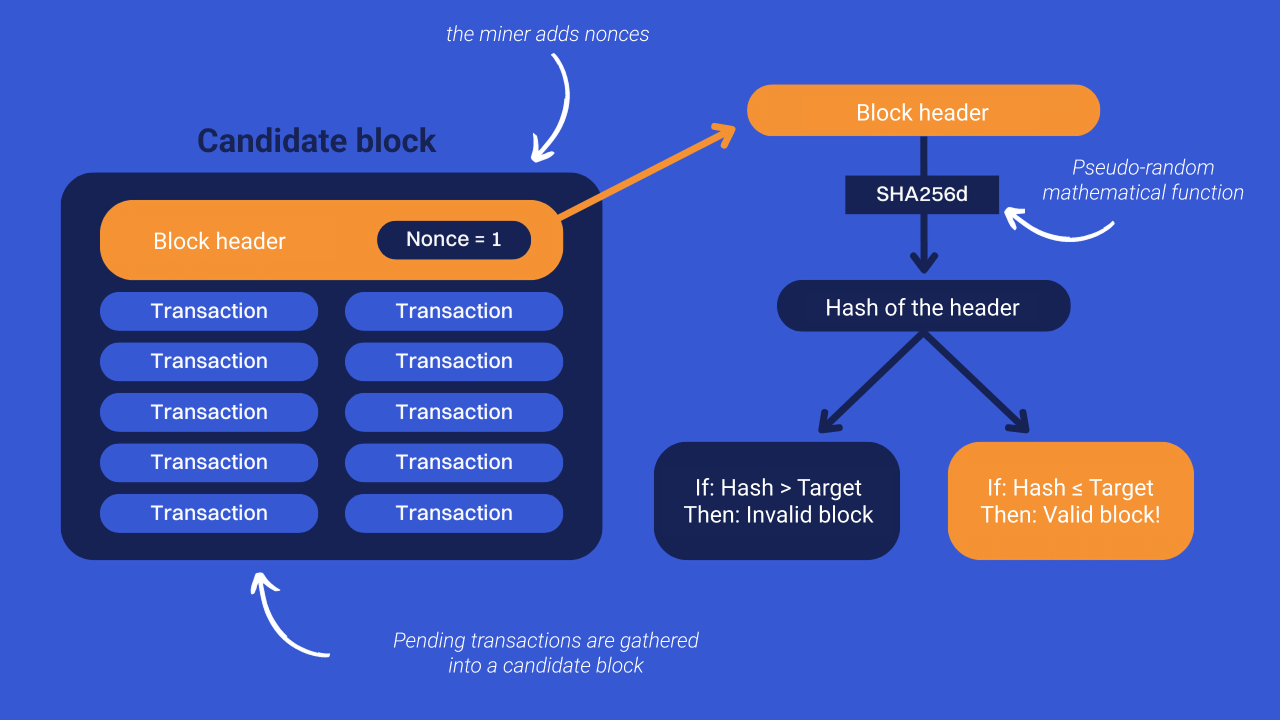
4. Decentralized Pools: HydraPool, P2Pool v2, and Beyond Centralized FPPS
HydraPool goals: Lower the barrier to spinning up your own pool. P2Pool v2-style coordination + new payout mechanics.
Reality check: FPPS (pay-per-share) still dominates centralized pools, but V2 + open firmware makes solo/p2pool viable again.
BIP-0110 signaling debates: How home miners can influence consensus rules via hash-rate voting.
The episode emphasizes: authentic decentralization requires miners who run nodes and care about policy—not just profit.
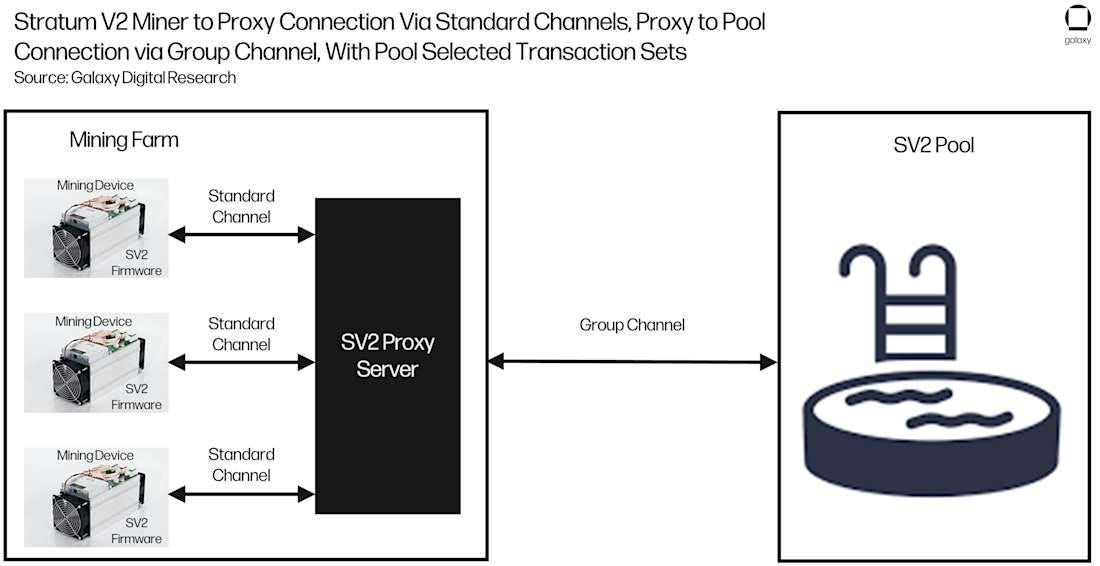
Centralized vs Decentralized Pool Flow (V2 proxy model):
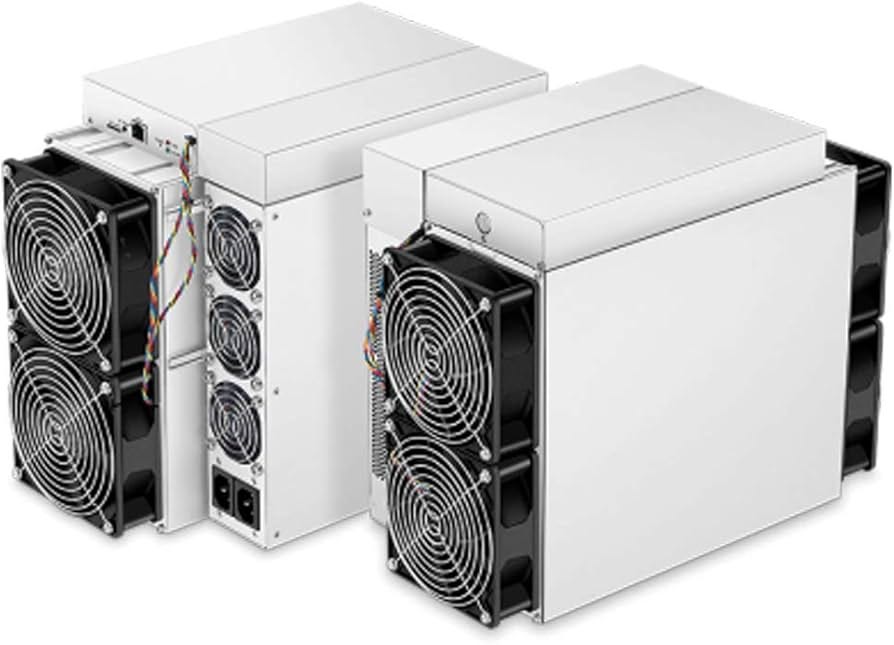
(classic industrial ASIC contrast)
5. ASIC Market, Big-Miners-to-AI Shift, and Hosted Mining Risks
Quick hits from the discussion:
Bitmain/WhatsMiner release cadence and tape-out risks.
Institutional miners eyeing AI/HPC—could free up hash-rate or create new centralization vectors.
Hosted mining vs. hash-rate rentals: sovereignty trade-offs analyzed.
DIY ethos wins when big players pivot elsewhere.
6. Community Pulse: Related X Posts from the Mining Trenches
Fresh signals from the home-mining and Stratum V2 scene (semantic + keyword search, 2025–2026):
@SoloSatoshi on NerdQaxe+ Hydro (May 2025): “They said home mining was dead. They said solo mining was a dream. They were wrong.” (Liquid-cooled 4.8 TH/s beast for quiet home ops.)

@pavlenex (Apr 2026): Running Stratum V2 UI + NerdAxe + Braiins hashrate, all solo-mining with his own node. “So much fun.”

@BitcoinNewsCom (Sep 2025): “Home Bitcoin mining has gotten a major upgrade. The NERDQAXE++ HYDRO… Run a miner. Decentralize hashrate.”

These posts show the DIY wave is accelerating with V2-native firmware and solar/liquid-cooling hacks.
7. Get Involved & Support Open Mining R&D
Point spare hash to dash.256f.org (the episode’s leaderboard).
Attend Telehash #4 on May 19 at Bitcoin Park (Austin).
Zap support via Lightning or run a Bitaxe pointed at open pools.
Final takeaway from the hosts: Stratum V2 + open hardware isn’t just a protocol upgrade—it’s the comeback story that keeps Bitcoin’s hash-rate decentralized, one garage miner at a time.
Subscribe to POD256, fire up your node, and start hashing. The nonce space is waiting. See you on the chain.
Built from POD256 #112 show notes + protocol specs. Stay sovereign.
All of our newsletters are published under the CC0 1.0 license.