
Assembling Freedom #16: AI, Open-Source Bitcoin Mining, and Battling Surveillance
A weekly newsletter from 256 Foundation

Introduction
Welcome to the 16th edition of Assembling Freedom, where we dive deep into the intersections of emerging technologies for enthusiasts like you. This issue breaks down POD256 Episode 104: “AI, Open-Source Mining, and the Fight Against Surveillance.”
Hosted by Bitcoin mining enthusiasts @econoalchemist, @skot9000, and @tylerkstevens, this episode explores how open-source principles in Bitcoin mining can counter AI-driven surveillance and centralization. Recorded live at Bitcoin Park in Nashville, TN, the discussion spans home mining revival, AI automation in ops, and decentralizing infrastructure to resist “surveillance capitalism.” We’ll provide a full breakdown with key insights, tools, and visuals to help you grasp the tech implications.
Key Takeaways
Home Mining Revival: The largest Bitcoin difficulty drop since the 2021 China ban has made home mining viable again, empowering individuals over centralized farms.
Open-Source Mining Stack: Emphasis on building a fully open-source ecosystem, including ASICs, FPGAs, and tools like Mujina firmware and HydraPool, to foster innovation and reusability.
AI Integration: AI agents are automating mining dashboards, tuning, and operations, but closed-source models pose risks like data leaks and surveillance.
Surveillance Resistance: Decentralizing mining infrastructure is key to fighting surveillance capitalism, with practical steps like pointing hash to foundations or self-hosting pools.
Practical Demos and Experiments: Live demos of monitoring tools and updates on creative setups like heat-pump/hot-tub mining highlight real-world applications.
In-Depth Breakdown
1. The State of Home Bitcoin Mining:
The hosts revisit the “glory days” of home mining post-China ban, noting the recent difficulty drop as a game-changer. This shift reduces barriers for enthusiasts, allowing smaller setups to contribute meaningfully to the network.
Difficulty Drop Impact: Largest since 2021 China mining crackdown. Enables profitable home operations with lower energy costs. Encourages decentralization away from industrial-scale farms.
Challenges and Opportunities: Energy efficiency remains key; experiments with heat reuse (e.g., hot tubs) show promise for sustainable setups.
Security PSAs: Run local AI agents carefully to avoid vulnerabilities.
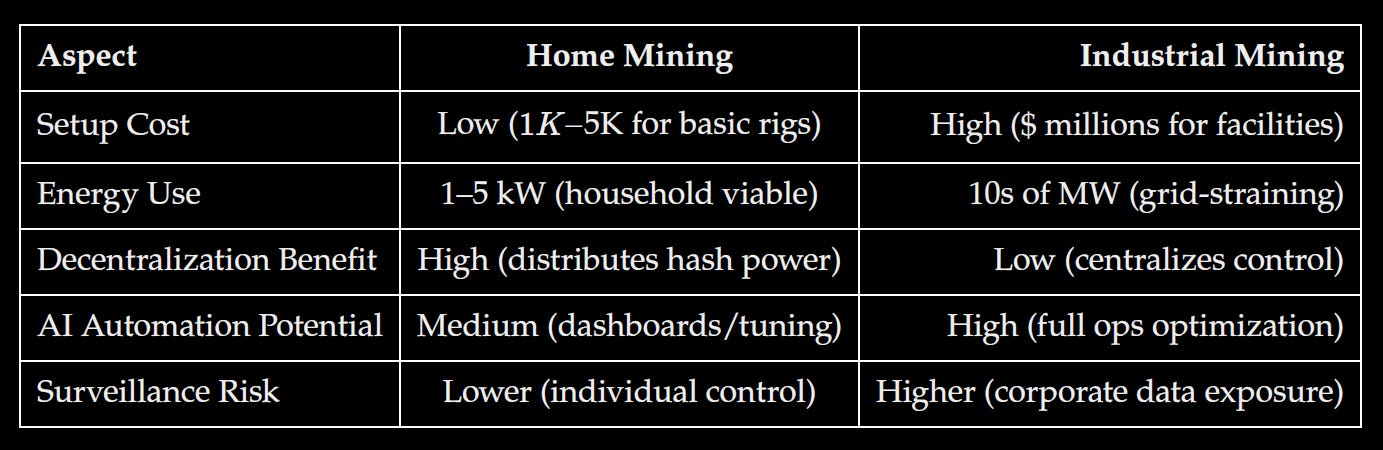
Here’s a quick comparison table of mining scales:
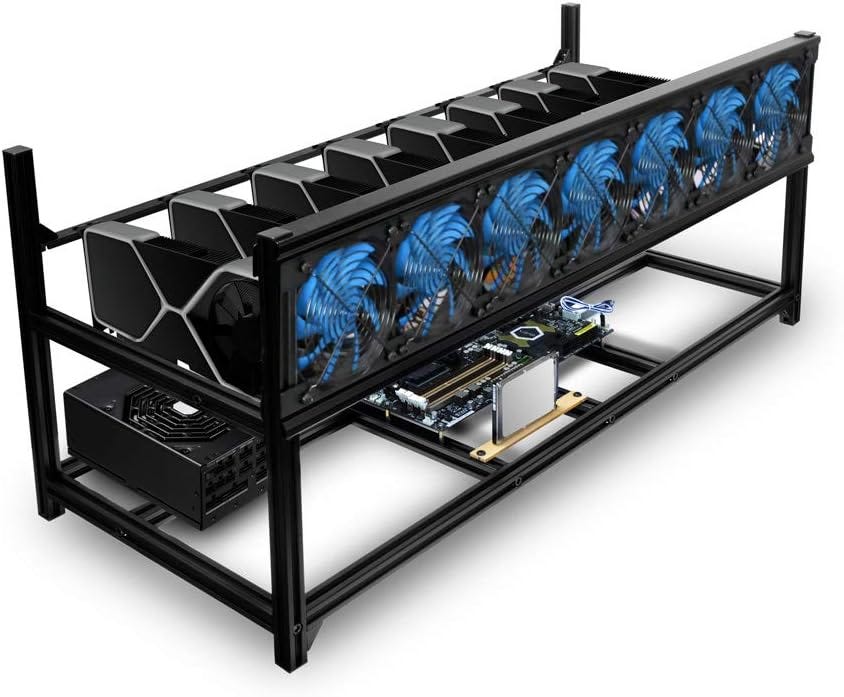
Visual: A typical cryptocurrency mining rig setup for home enthusiasts.
2. Pushing for a Fully Open-Source Bitcoin Mining Stack
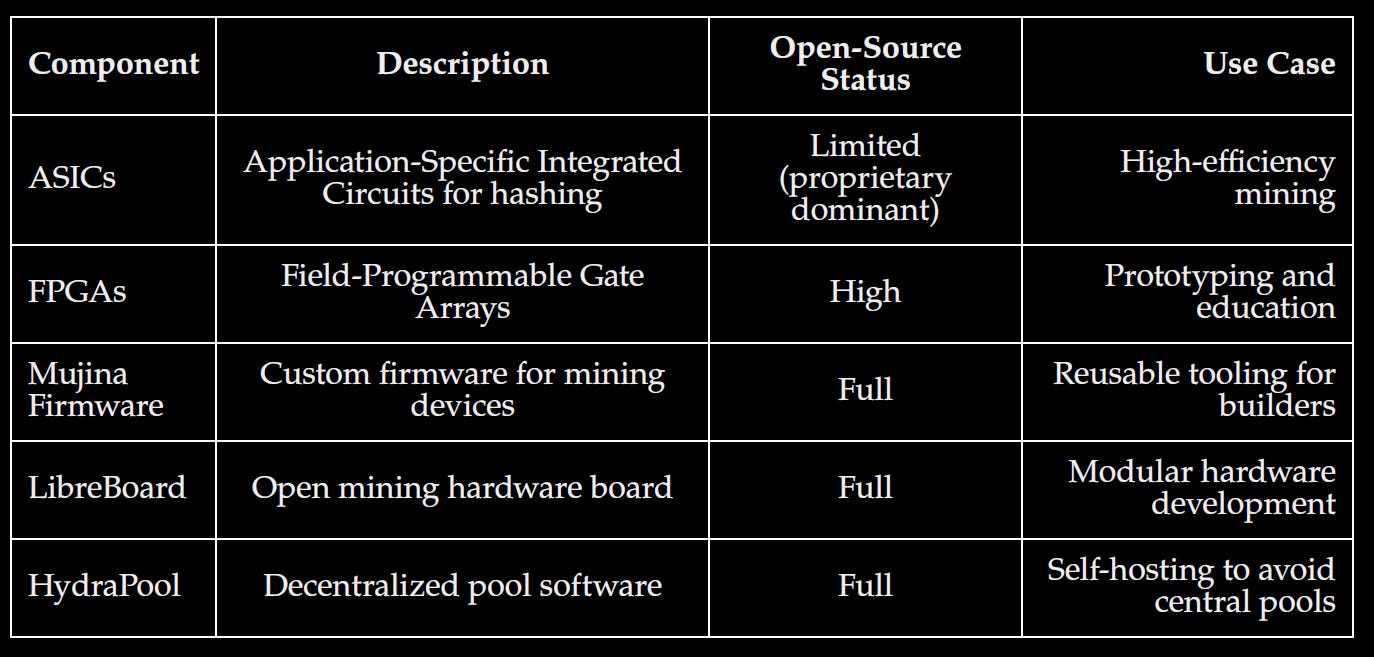
The episode stresses the need for open-source tools to avoid “reinventing the wheel.” Competitive open-source ASICs are still out of reach, but FPGAs serve as educational bridges.Key Tools Discussed:
Mujina Firmware: Reusable for custom mining hardware, promoting modularity.
LibreBoard: Open hardware for mining boards, enabling community contributions.
HydraPool: Self-hosting pool software for decentralized hashing.
FPGAs vs. ASICs: FPGAs for learning/prototyping; ASICs for high-performance (but closed-source dominates).
Feasibility Insights:
Open ASICs: Not yet competitive due to proprietary tech barriers. Community Support: Point hash to the 256 Foundation or self-host to build resilience.
Table of Open-Source Mining Components:
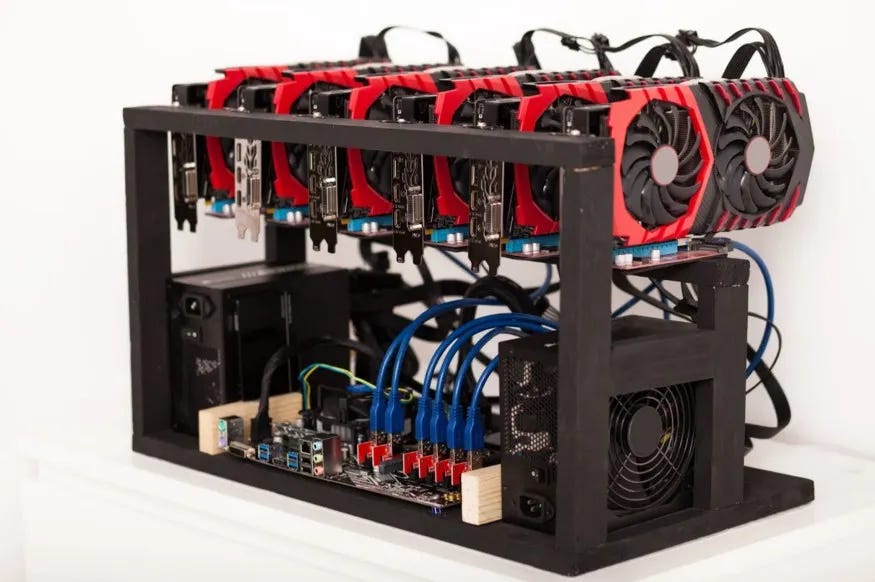
Visual: Another view of a GPU-based mining rig, illustrating scalable open-source potential.
3. AI Realities in Mining and Beyond
AI is already automating mining operations, from dashboards to ops tuning. However, the hosts warn about closed models’ risks, including leaked skills and data exposure.
AI Agents in Action: Automate monitoring and optimization, reducing manual oversight. Local agents recommended for security, with PSAs on safe implementation.
Risks of Closed AI: Data leaks: Proprietary models could expose mining ops data.
Surveillance Tech: Ties into broader “surveillance capitalism,” where AI tracks and monetizes user behavior.
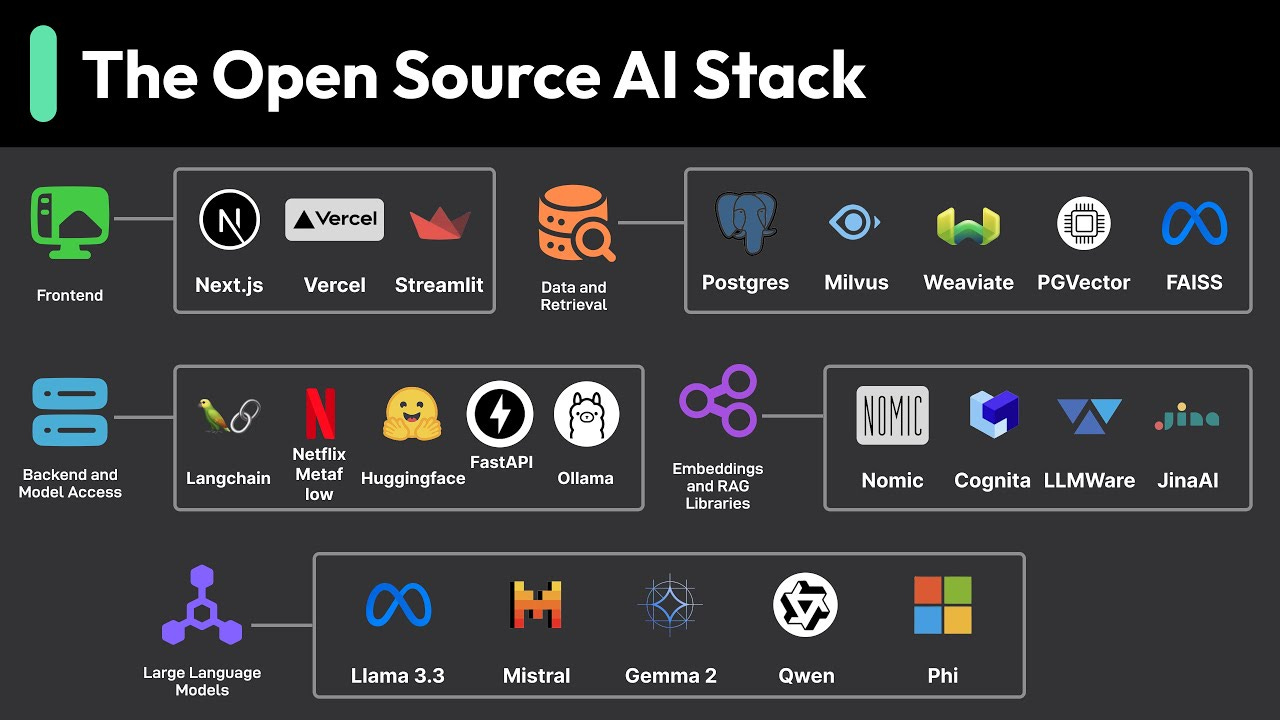
Visual: An overview of top open-source AI models, contrasting with closed alternatives.

A stack diagram of open-source AI tools for integration.
4. The Fight Against Surveillance Capitalism
Decentralizing mining is positioned as a direct counter to surveillance, keeping Bitcoin open and resistant to control.
Core Argument: “Decentralizing mining infra is how we resist surveillance capitalism and keep Bitcoin open for everyone.”
Broader Implications: AI exacerbates surveillance if closed-source; open models promote transparency.
Ties to societal shifts: AI could devalue labor, leading to economic disruptions (as discussed in related analyses).
Visual: Illustration of surveillance capitalism, showing data as a watchful eye.

Related X PostsTo enrich the discussion, here are relevant X posts echoing the episode’s themes:
[@nic__carter] (


discusses AI’s societal impact, including labor devaluation and the need for attested content in a post-truth era.
[@OraProtocol] (

quotes: “If you wanna build a system that you can own, that you can make censorship resistant... There’s only one way and that’s open source.”
[@Yungwest_Jeff] (


on shifting AI focus to control and ownership: “Model quality is table stakes now. The real divergence is control.”
[@per_anders] (

advocates for open-source AI to debug training and protect development: “OSS is the way forward.”
[@VizierPrime] (

notes: “Open-sourcing the algorithm addresses procedural opacity, not power concentration.”
Final Thoughts
This episode of POD256 highlights how open-source ethos in Bitcoin mining can extend to AI, fostering a more decentralized, surveillance-resistant future. For tech enthusiasts, it’s a call to action: Experiment with these tools, contribute to open projects, and stay vigilant on AI ethics.
Subscribe for more breakdowns,
https://news.256foundation.org.
Feedback? Reply below!